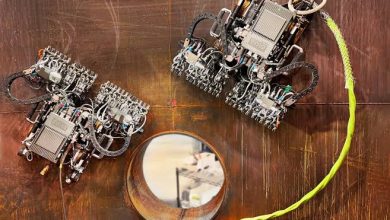
Gecktech: Exploring Innovation in the Modern Digital Era


Introduction
Technology has become one of the strongest forces shaping modern life. From the way people communicate and work to how businesses serve customers and manage information, digital tools have changed expectations across almost every industry. Innovation is no longer limited to large technology companies or research laboratories. Cloud platforms, artificial intelligence, automation, connected devices, data analytics, and digital services are increasingly accessible to organizations and individuals of different sizes. In this changing environment, the concept represented by gecktech can be viewed as part of a broader movement toward practical, connected, and increasingly intelligent technology.
The modern digital era is also different from earlier periods of technological development because several innovations are progressing simultaneously. Artificial intelligence is becoming integrated into software applications, businesses are moving more workloads into cloud environments, cybersecurity is becoming a strategic priority, and connected devices are producing growing amounts of data. At the same time, users expect digital experiences to be fast, convenient, personalized, and reliable. These developments are encouraging organizations to rethink how technology can support productivity, decision-making, customer engagement, and long-term growth.
Understanding this technological transformation requires more than focusing on individual gadgets or software products. It involves looking at how different technologies work together and how innovation can solve practical problems. This article explores the broader technology landscape associated with gecktech, examining important trends, applications, challenges, and opportunities that define digital innovation today.
The Changing Meaning of Digital Innovation
Digital innovation has evolved considerably over the past decade. Previously, organizations often treated technology as a supporting function used for tasks such as storing information, communicating with employees, or maintaining websites. Today, technology can influence the entire operating model of an organization. Digital platforms can automate repetitive activities, analyze large datasets, support remote collaboration, and help businesses understand customer behavior in greater detail.
This shift is important because innovation is no longer simply about purchasing the newest technology. Successful digital transformation depends on identifying a genuine problem and selecting an appropriate solution. For example, a company experiencing inefficient customer support may benefit from intelligent automation, while an organization struggling with fragmented information may need a better cloud-based data architecture. The value comes from applying technology thoughtfully rather than adopting it simply because it is popular.
The gecktech concept fits naturally into this wider understanding of innovation. Modern technology solutions increasingly emphasize usability, connectivity, adaptability, and measurable results. Whether the focus is software, automation, data, artificial intelligence, or connected systems, the objective is often to make complex processes easier to manage while creating opportunities for better decisions.
Artificial Intelligence and the New Digital Landscape
Artificial intelligence has become one of the most influential developments in the current technology environment. Modern AI systems can analyze information, identify patterns, generate content, support customer interactions, assist with programming, and perform tasks that previously required significant manual effort. Generative AI has expanded this impact by allowing users to interact with technology through natural language and receive useful outputs such as text, summaries, ideas, code, and structured information.
However, responsible implementation remains essential. AI systems depend on the quality of their data, instructions, integration, and oversight. Businesses must consider accuracy, privacy, security, intellectual property, and human review when introducing AI into important workflows. Simply adding an AI feature does not automatically create meaningful innovation.
AI as a Practical Business Tool
Organizations are increasingly exploring AI for practical purposes rather than treating it only as an experimental technology. Customer service teams may use AI-assisted systems to summarize interactions, while marketing departments can analyze audience information and develop content more efficiently. Software teams may use AI coding assistants to accelerate routine development tasks, with human professionals continuing to review and test the results.
Within a broader gecktech perspective, artificial intelligence demonstrates how technology can move from being a passive tool to becoming an active participant in digital workflows. The most useful implementations are likely to combine automation with human judgment, allowing people to focus more heavily on creative, strategic, and interpersonal responsibilities.
Cloud Computing and Connected Digital Services
Cloud computing has become another fundamental component of modern digital infrastructure. Instead of depending entirely on physical servers located within an organization’s premises, businesses can use cloud-based resources for computing, storage, databases, software applications, backup systems, and collaboration. This approach can provide flexibility because resources can be adjusted according to changing requirements.
Cloud technology is particularly valuable for organizations operating across multiple locations or supporting remote employees. Teams can access shared applications and information from different environments, provided that appropriate authentication and security measures are in place. Cloud infrastructure can also support rapid experimentation because organizations can deploy services without always making large investments in physical hardware.
| Technology Area | Common Modern Application | Potential Business Value |
|---|---|---|
| Artificial Intelligence | Analysis, automation, content assistance | Faster workflows and improved insights |
| Cloud Computing | Storage, applications, infrastructure | Scalability and flexible access |
| IoT | Connected sensors and devices | Real-time monitoring and data collection |
| Data Analytics | Reporting and predictive analysis | Better-informed decisions |
| Cybersecurity | Identity, monitoring, threat protection | Reduced digital risk |
The combination of cloud platforms with other technologies is particularly significant. AI applications often require scalable computing resources, while connected devices can send information to cloud-based systems for analysis. This interconnected architecture illustrates why modern innovation increasingly depends on technology ecosystems rather than isolated products.
The Growing Importance of Data
Data has become one of the most valuable resources in the digital economy. Every online transaction, customer interaction, connected device, application, and business process can potentially generate information. When organized and analyzed correctly, that information can reveal patterns that support better decision-making.
Yet having large amounts of data does not automatically produce useful insights. Organizations must consider data quality, consistency, governance, security, and accessibility. Poorly structured information can produce misleading results, while fragmented systems can prevent teams from obtaining a complete picture of business activity.
A modern gecktech approach to digital innovation therefore involves thinking carefully about the entire data lifecycle. Information needs to be collected responsibly, stored securely, processed efficiently, and presented in a form that people can understand. This can help transform raw information into actionable knowledge rather than allowing valuable data to remain unused.
From Data Collection to Decision-Making
Data analytics can support many everyday business activities. Retailers can examine purchasing patterns, manufacturers can monitor equipment performance, and service providers can identify recurring customer issues. In each case, analytics becomes useful when it answers a specific question or helps solve a defined problem.
Advanced analytical systems can also support forecasting. Historical information can help organizations recognize patterns and estimate potential future conditions. These predictions are not guarantees, but they can provide additional context for planning. Human expertise remains important because business decisions often involve factors that cannot be represented completely through historical data.
Automation and the Future of Work
Automation is another major part of contemporary digital innovation. Software automation can handle repetitive activities such as data entry, document processing, scheduling, notifications, and routine reporting. Physical automation can support manufacturing, logistics, agriculture, healthcare, and other industries where machines can perform predefined tasks.
The growing availability of AI-powered automation is expanding these possibilities further. Traditional automation generally follows clearly defined rules, while newer intelligent systems can process less structured information. For example, an organization might combine document recognition with AI-based classification to organize incoming files more efficiently.
This does not necessarily mean that technology simply replaces human work. In many situations, the more practical objective is to redesign workflows so people spend less time on repetitive tasks. The resulting productivity gains can allow employees to dedicate more attention to problem-solving, communication, research, creativity, and strategic responsibilities.
From this perspective, gecktech can be associated with the broader movement toward technology that complements human capabilities. The strongest digital workflows are often those where automated systems handle predictable processes while people retain responsibility for judgment, accountability, and complex decisions.
Cybersecurity in an Increasingly Connected World
As organizations become more dependent on digital infrastructure, cybersecurity has become an essential part of technology planning. Connected applications, cloud services, mobile devices, remote work environments, and digital transactions all create potential points of exposure. A security incident can affect not only systems but also customer confidence and business continuity.
Modern cybersecurity therefore involves multiple layers rather than a single protective tool. Organizations commonly consider identity management, access controls, encryption, monitoring, software updates, backups, employee awareness, and incident-response planning. Security should also be considered during the design of new digital services rather than added only after deployment.
One practical approach is to focus on reducing unnecessary access. Employees and systems should generally receive only the permissions required for their responsibilities. Regular reviews can help organizations identify outdated accounts and excessive privileges. Strong authentication and continuous monitoring can add further protection.
For the digital innovation represented by gecktech, security is an important foundation. Faster systems and smarter applications have limited value if users cannot trust them. Innovation and security therefore need to develop together.
Connected Devices and the Internet of Things
The Internet of Things, commonly called IoT, has expanded the relationship between physical objects and digital systems. Sensors can collect information about temperature, location, movement, equipment condition, energy consumption, and other variables. That information can then be transmitted to software platforms for monitoring and analysis.
Consider a modern industrial facility. Connected sensors could monitor machinery continuously and identify unusual operating conditions before a major failure occurs. Similarly, smart building systems can track energy consumption and adjust equipment according to usage patterns. These examples demonstrate how digital technology can influence physical environments.
The development of IoT also creates new challenges. Large numbers of connected devices need to be maintained, updated, authenticated, and secured. Organizations must also decide how long data should be retained and who should have access to it. Successful implementation therefore requires both technological infrastructure and effective governance.
How Organizations Can Approach Digital Transformation
Digital transformation works best when technology adoption is connected to clearly defined objectives. Organizations should first understand the problem they want to solve, then evaluate available technologies according to cost, scalability, security, usability, and expected outcomes.
Several considerations can help create a more structured approach:
- Identify specific operational or customer problems before selecting technology.
- Evaluate how new systems will integrate with existing infrastructure.
- Consider security, privacy, maintenance, and long-term scalability.
- Measure results using practical business or operational indicators.
- Provide employees with appropriate training and support.
These principles help prevent digital transformation from becoming a collection of disconnected technology projects. A business might have advanced software but still struggle if its systems cannot communicate with each other or employees do not understand how to use them effectively.
Challenges Facing Modern Technology Innovation
Innovation brings opportunities, but it also introduces challenges. One of the most important is the speed at which technology changes. A system selected today may need significant updates as new standards, threats, and capabilities emerge. Organizations therefore need to think beyond initial deployment and consider ongoing maintenance.
Cost is another consideration. Digital solutions can require investment in infrastructure, software subscriptions, cybersecurity, training, and skilled professionals. Smaller organizations may need to prioritize projects carefully and adopt technologies gradually rather than attempting to transform every process simultaneously.
There are also ethical and social questions surrounding emerging technology. AI systems can produce inaccurate information, automated decisions can introduce unintended bias, and extensive data collection can create privacy concerns. These issues highlight the importance of governance and human oversight.
A mature gecktech perspective should therefore recognize that innovation is not defined only by technical sophistication. Responsible implementation, transparency, security, accessibility, and practical usefulness are equally important components of modern technology development.
The Future Direction of Digital Innovation
The next phase of digital innovation is likely to involve greater integration between technologies that were previously treated as separate categories. AI can work with cloud infrastructure, IoT devices can generate data for analytical platforms, and automation can connect information across business applications. This convergence can create more responsive digital environments.
Edge computing may also become increasingly important for situations where information needs to be processed close to the device generating it. This can be useful when organizations require rapid responses or want to reduce the amount of information sent continuously to centralized systems.
Another important trend is the growing emphasis on user experience. Technology can be powerful without being complicated for the end user. Modern applications increasingly aim to hide unnecessary complexity and provide intuitive interfaces. This shift may encourage technology providers to focus not only on what their systems can do but also on how naturally people can use them.
In this environment, gecktech represents an idea that extends beyond individual technologies. It reflects the broader direction toward digital systems that are intelligent, connected, adaptable, and designed around real-world needs.
FAQs
What does gecktech represent in the modern technology landscape?
Gecktech can be understood in the context of modern digital innovation, where artificial intelligence, cloud computing, automation, data analytics, connected devices, and cybersecurity increasingly work together. The concept highlights the broader movement toward practical and interconnected technology solutions.
Why is artificial intelligence important for digital innovation?
Artificial intelligence can process large amounts of information, automate certain tasks, identify patterns, and assist people with activities such as content creation, analysis, customer service, and software development. Its usefulness depends heavily on responsible implementation, reliable data, appropriate oversight, and clearly defined objectives.
How does cloud computing support modern businesses?
Cloud computing provides flexible access to computing resources, storage, applications, and infrastructure. It can help organizations scale services, support distributed teams, simplify collaboration, and experiment with new digital solutions without depending entirely on locally managed hardware.
Why is cybersecurity essential for digital transformation?
As organizations become more digitally connected, they face increasing exposure to security threats and operational disruptions. Cybersecurity measures such as strong authentication, access controls, encryption, monitoring, backups, and employee awareness can help protect systems and information.
What role will automation play in the future?
Automation is likely to continue handling repetitive and predictable activities while increasingly assisting with more complex information-based workflows. Rather than viewing automation solely as a replacement for people, organizations can use it to reduce routine workloads and allow employees to concentrate on tasks requiring judgment, creativity, and communication.
What makes technology innovation successful?
Successful innovation generally combines a genuine problem, appropriate technology, reliable implementation, strong security, user adoption, and measurable outcomes. The newest technology is not necessarily the most useful; its value depends on how effectively it addresses real needs.
Conclusion
The modern digital era is defined by rapid technological development and increasing connections between different digital systems. Artificial intelligence, cloud computing, data analytics, automation, IoT, and cybersecurity are no longer isolated areas of innovation. Together, they are reshaping how organizations operate, how people interact with services, and how information is transformed into practical decisions.
The broader gecktech concept provides a useful lens through which to consider this transformation. Modern innovation is increasingly about creating technology that is connected, adaptable, secure, and useful in real-world situations. Businesses and individuals that understand these principles can approach emerging technologies with greater clarity instead of adopting new tools simply because they are fashionable.
Ultimately, the future of digital innovation will depend on balancing technological possibilities with practical needs and responsible implementation. As emerging systems become more capable, the focus will increasingly shift toward how effectively they solve problems, improve experiences, support people, and create sustainable value. That balance will remain central to the continuing evolution of technology in the years ahead.